February 6, 2015
We began the day by celebrating the Eucharist in St. Xavier Church, located on a campus that includes a Jesuit grade school, high schools and college. The schools were founded 73 years ago and supported by the Jesuit Chicago province; today they are some of the top schools in the state of Rajesthan. It was a joy, after all our visits to Hindu, Muslim, Buddhist and Sikh places of worship, to preside at a service in a sanctuary where we felt ourselves at home with the rituals, images and statues familiar to us.
Father Tom Kane, CSP, offered a homiletic reflection on the spirituality of pilgrimage. Pilgrimage is different from religious tourism. There’s a pilgrim purpose. Why did you come? For yourself or just to please someone else?
There’s also pilgrim behavior. Keep your purpose at the front of your consciousness and keep coming back to it in times of stress – when the bus is late or someone takes too long in shopping, etc. See it as an opportunity to refocus by saying a favorite pilgrim prayer or mantra.
On pilgrimage, you leave your place of security and go to a new place so as to get a new perspective on where you’ve come from and where you’re going in your life. Pilgrimage thus involves conversion or a change in attitude. This can take various forms, such as the healing of a memory or an insight into who you really are or want to become, and what’s important to you.
Before leaving the city of Jaipur, we paid tribute (literally) to its reputation as a “shoppers paradise” with a stop at a top textile store to observe its craftsmen executing block printing on cotton and weavers at their looms working with wool. We emerged with scarves, tablecloths and napkins, shirts and skirts, and even a rug. A fitting farewell to one of the world’s capital cities for quality arts and crafts!
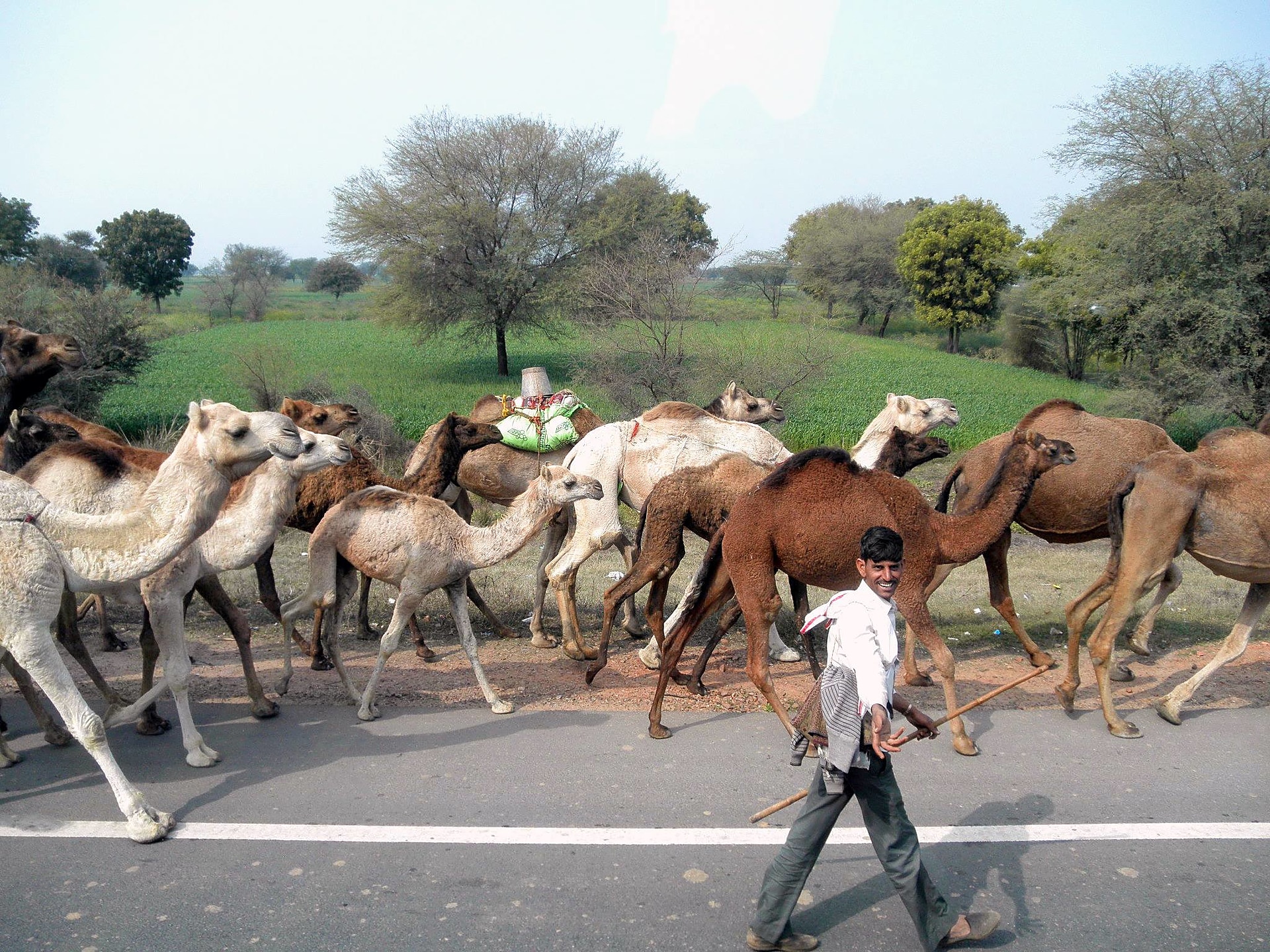
Then we hit the road for a four-hour bus ride through the countryside – passing flocks of camels along the high way and getting a good look at simple rural dwellings with red brick walls and thatched, soil, or tin roofs – to arrive at our visit destination for the day, Fatehpur Sikri.
Built by the Muslim leader Akbar in 1569 and considered the most ambitious achievement of the Mughals after the Taj Mahal, it is today a deserted museum city in sandstone which stands as a tribute to Akbar’s efforts to achieve an artistic and architectural synthesis between the Hindu and Muslim cultures. There are no streets or ordinary habitations; only an arrangement of broad terraces and stately courts and palaces. The sandstone engravings covering walls and pillars and ceilings are amazingly well preserved after 500 years.
We enjoyed the opportunity afforded by the travel time to just relax in the bus and chat. The group is definitely developing a sense of community with attention to one another’s needs.