November 10, 2014
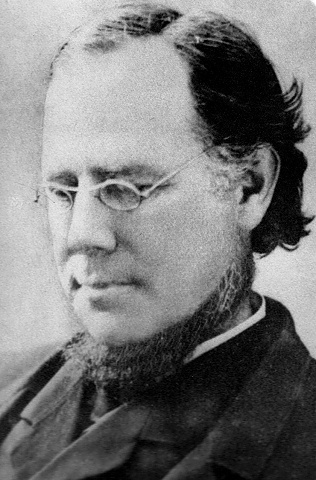
Servant of God Isaac Thomas Hecker wrote:
Man is a dependent being and cannot live by himself alone. Without loving something the soul would not exist. To say that we renounce all consolations and pleasures is to pretend the impossible. When the saints, for example St. John of the Cross, speaks of the necessity of refusing all consolations and pleasures, he means that we must replace the love of creatures with the love of the Creator; the sensual pleasures of the passions for the spiritual consolations of Jesus Christ our Divine Spouse.
The laws of spiritual life are like the laws of anything else; no one is expected to give up the greater for the less. For unless the superior part of the soul experiences greater ardor for spiritual things than the movements of its passions, the soul will not overcome the pleasure of which sensual things are the occasion. This is St. John of the Cross, and he says again: “It is necessary that the soul should be embraced with a holy love of her Divine Spouse, so that in placing all her pleasure in her Spouse she may receive the strength and constancy to reject the love of all other objects. (Ascent of Mount Carmel, 50.1 chap 14 p. 105)
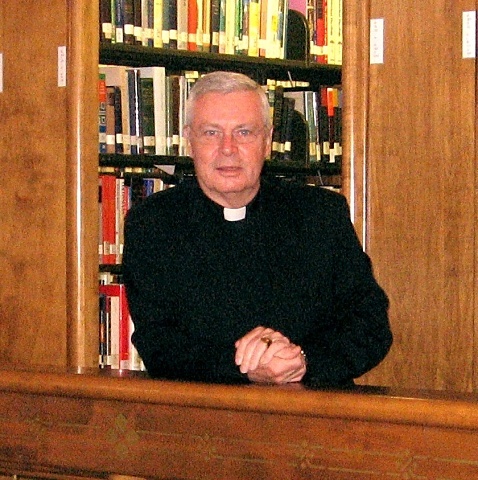 A Response by Father Paul Robichaud, CSP
Servant of God Father Isaac Hecker writes about love and the spiritual life. The first is fundamental to all humanity, which is personal relationships. As social beings, we live in a network of relationships. We need and often become dependent on each other. Infants need to he held and nurtured and seniors as they grow older rely on others to assist them. Some adults think they can separate and become completely independent. As Father Hecker says, this is impossible. We can attempt to live totally separate lives but only to a point. We are constructed to need other persons in our lives. As Father Hecker writes, we cannot live for ourselves alone. Personhood is a part of our spiritual lives as well, for the most important relationship is with the person of God – a relationship we call faith. Father Hecker writes, “Without loving something the soul would not exist.” Just as the Trinity is a community of persons, so as Catholic Christians, our faith is communal. Our relationship with the persons of God serves to bind us together with each other, making us the people of God.
The second is an understanding of prayer that is developed in the writings of St. Theresa of Avila and her disciple, St. John of the Cross. Called a “Mystical Union;” it is the highest degree of mystical life possible in a relationship with God. It is the seventh room in St. Theresa’s classic work on mystical prayer, The Interior Castle; and it is understood that the saint reached this stage of union with God in the last years of her life. There are three stages of prayer that comprise the journey to a mystical union. The first is the prayer of union where the soul is deeply aware of God’s presence. The second is the prayer of ecstatic union where the mystical union between God and the soul grows so that the body falls into ecstasy. The famous Bernini statue of St. Theresa in Ecstasy depicts this stage. Finally in the prayer of transforming union, the soul gives itself to God completely and the soul is completely transformed by God’s love and shares in God’s life as fully as is possible in this life. In a general audience in March 1982, St. John Paul II referred to the mystical union as an appropriate prayer form for celibate clergy and religious to practice in support of their vows. Just as Father Hecker understands relationships as fundamental to the human person, so as a follower of St. Theresa of Avila, he understood the highest possible relationship to be with God in a mystical union.
About this series
Father Paul Robichaud, CSP, is the historian of the Paulist Fathers and postulator of the Cause of Father Hecker. His office is located at the Hecker Center in Washington, D.C.
If you have asked Father Hecker to pray for you or another person who is ill and you believe something miraculous has happened, please phone Father Paul at 202-269-2519 or write to [email protected] and tell him your story.