January 4, 2021
Editor’s note: These reflections were originally posted to Fr. Mark-David’s Facebook page.
“The Epiphany is the feast of every man and woman who, having sought God, find him, and having found him, still seek him as the rest of us do.” +Cardinal Martini
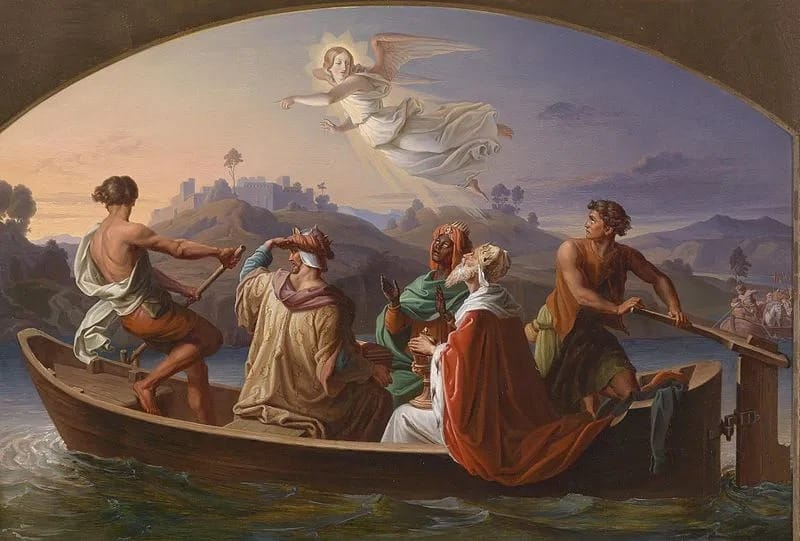
Never saw the magi in a boat? The idea of journey captured this German painter, as it does me. We seek God, however it is we are given the light to understand God, but even having found what we were looking for, that is not the end of the our journey. No matter what we have found, there is still more of God to seek, life obscures what we once thought we knew of God, demanding we seek God anew. That we lost sight, or grasp, of how we understood God and ourselves, is not failure, or loss of faith. Rather there is a new star shining in the sky, calling us to search for more, and then, perhaps, more after that.
That the star shines in the dark night of our soul, when we feel lost or alone, is a sign God is looking out for us, signaling, beckoning us to keep our life, our imagination, moving. We are not alone, we are not lost, even if we do not know where we are going, we are simply, on the move. I find that consoling.
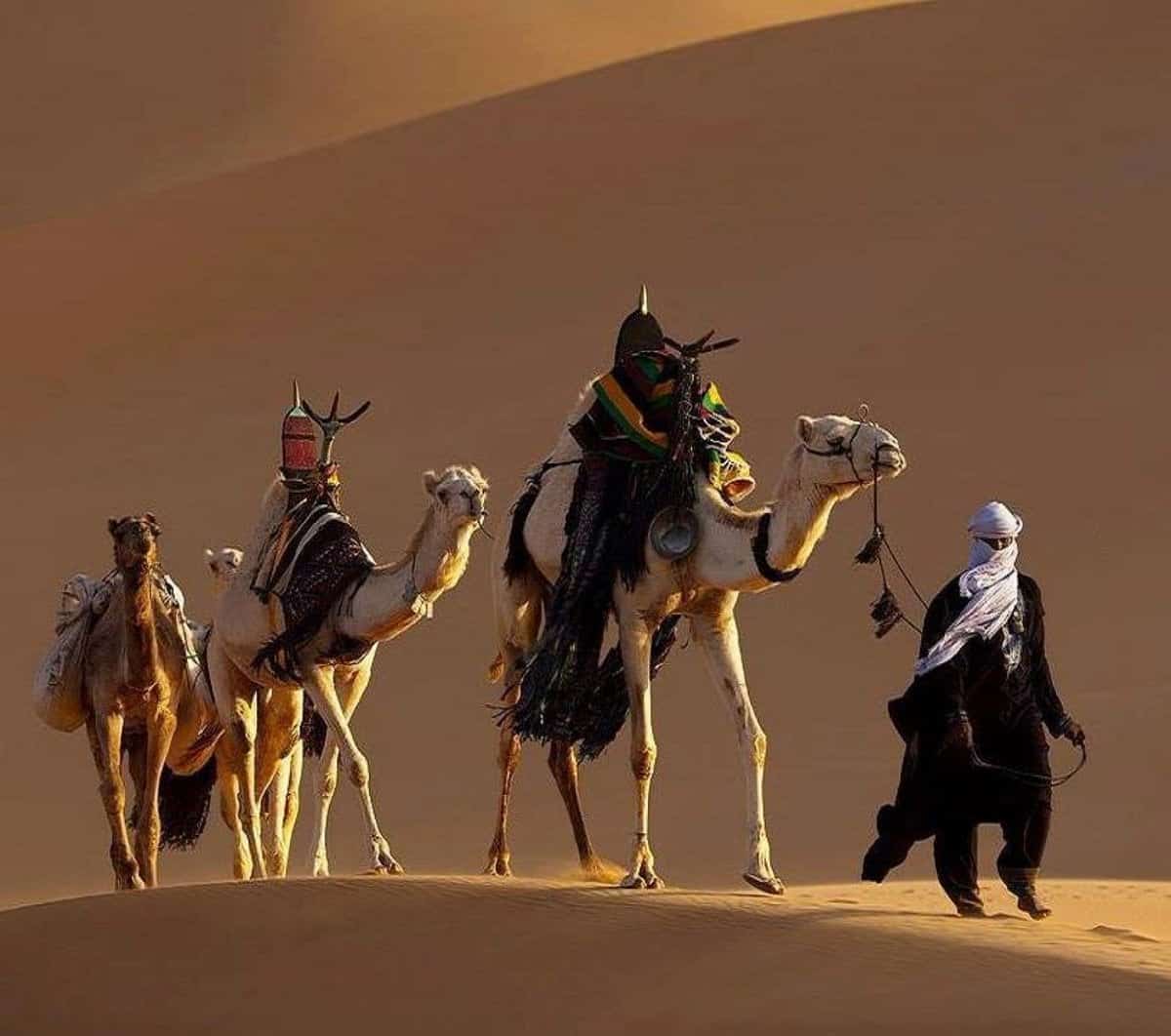
“The three magi of Matthew’s Gospel were questioning and searching persons. But they were not only that. As they saw a sign in the heavens, they set out. They left everything behind and were not afraid of the struggles of a long journey. They set out on a path on their own two feet.” +Walter Cardinal Kasper
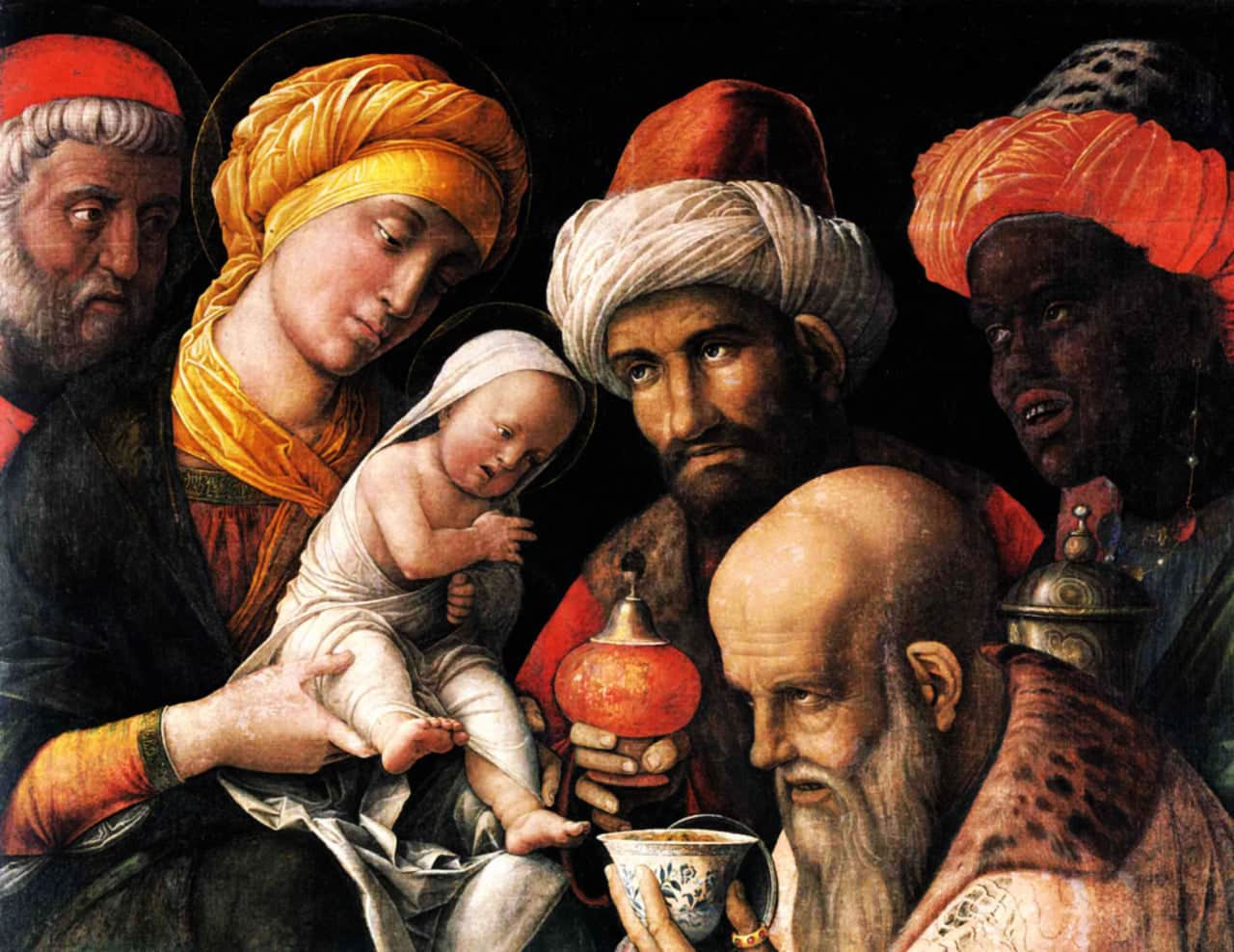
Fr. Gil and I visited this painting at the Getty in LA. Here, as in most other paintings of the magi, they are depicted as foreigners, young, middle aged and old, African, Middle Eastern and Caucasian. The Christ Child is born for people of every way and time of life, and for all, without discrimination and prejudice. Notes at the Getty speculated that the model for the black magi was likely a slave, an irony and perhaps a sacrilege that underscores the universality of the Epiphany message.
“The star that the wise men followed led them to neither to a palace of the rich or powerful nor to academy of scholars, but to a child. These three were truly wise human beings, for they understood that God does not normally come to us in extraordinary, unusual, extravagant, adventurous, sensational ways-or in spectacular events…what is truly wonderful is that the extraordinary happens right in the middle of everyday, quite ordinary life.” +Walter Cardinal Kasper
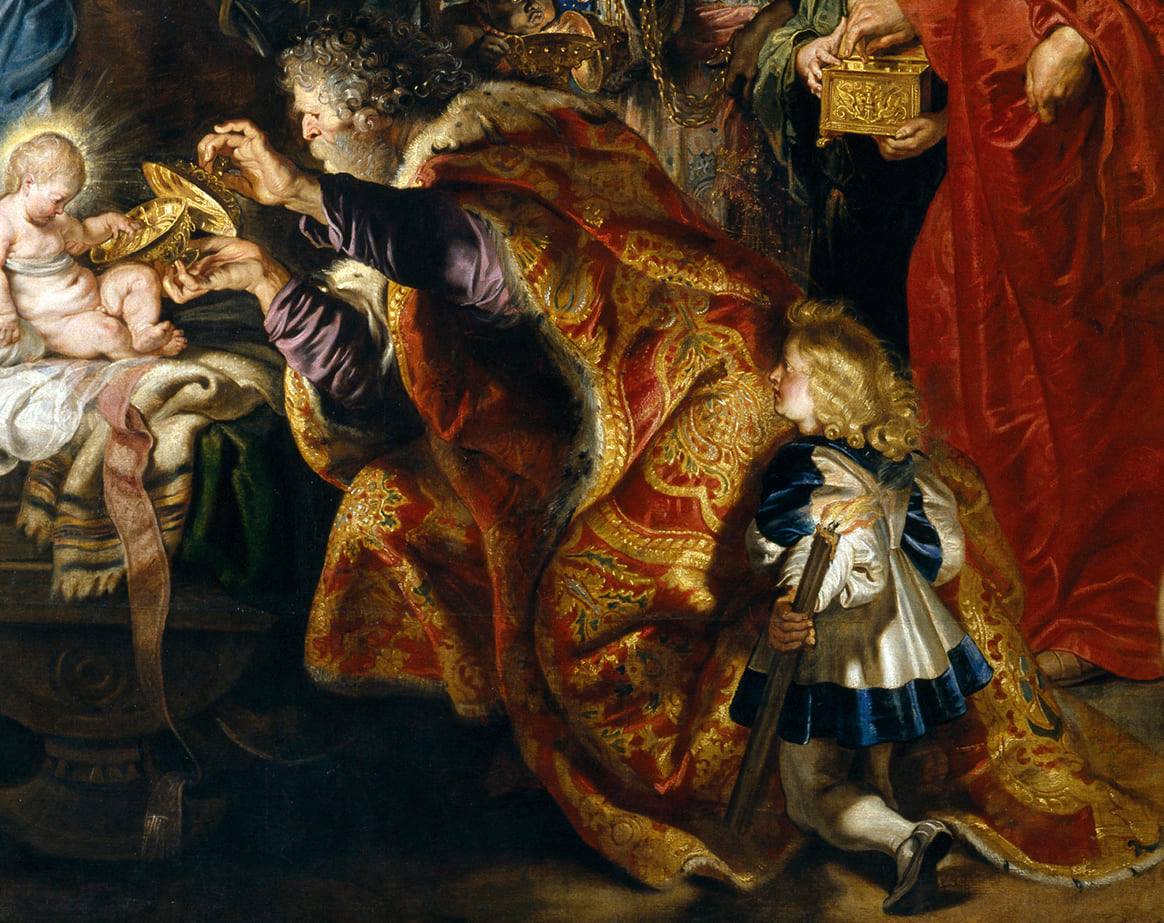
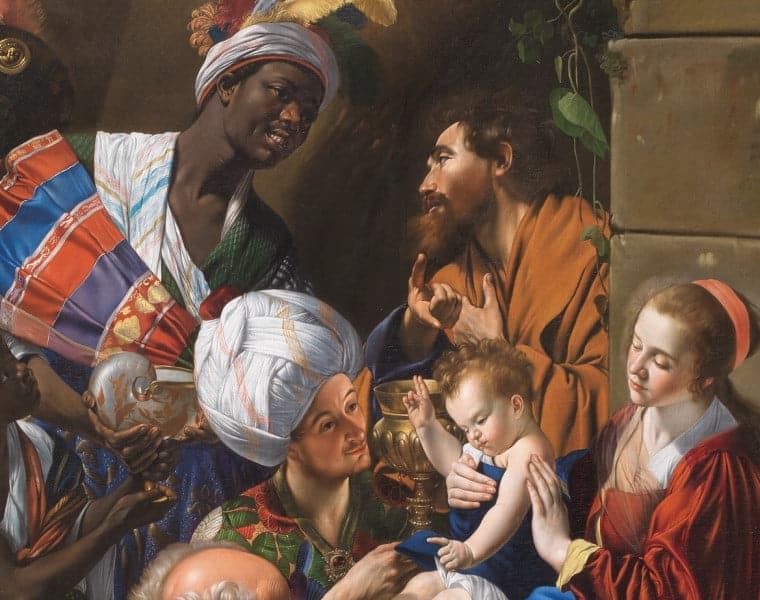
In this detail of the Adoration of the Magi by Rubens, which hangs in the Prado, the baby Jesus is playing with gold coins offered by Melchior. The magi brought gifts to the Christ Child, and so we gift each other at Christmas.
This reminds me of a recent story where another wise man from the East, brought gifts to the Christ child. In this case, a police officer from Somerset, MA, was called to local stop and shop where a woman was being held for not scanning all the groceries she put into her bag. One of the officers saw two small children, about the same age of his own children, who belonged to the mother who was stealing-to feed them Christmas dinner. The officer told the women never to come back to that store, took them to another grocery store and bought them a $250.00 gift card with which to purchase groceries. “I could not imagine going to a grocery store and not being able to feed my children” the officer said. I think his was a gift greater than gold, frankincense and myrrh.
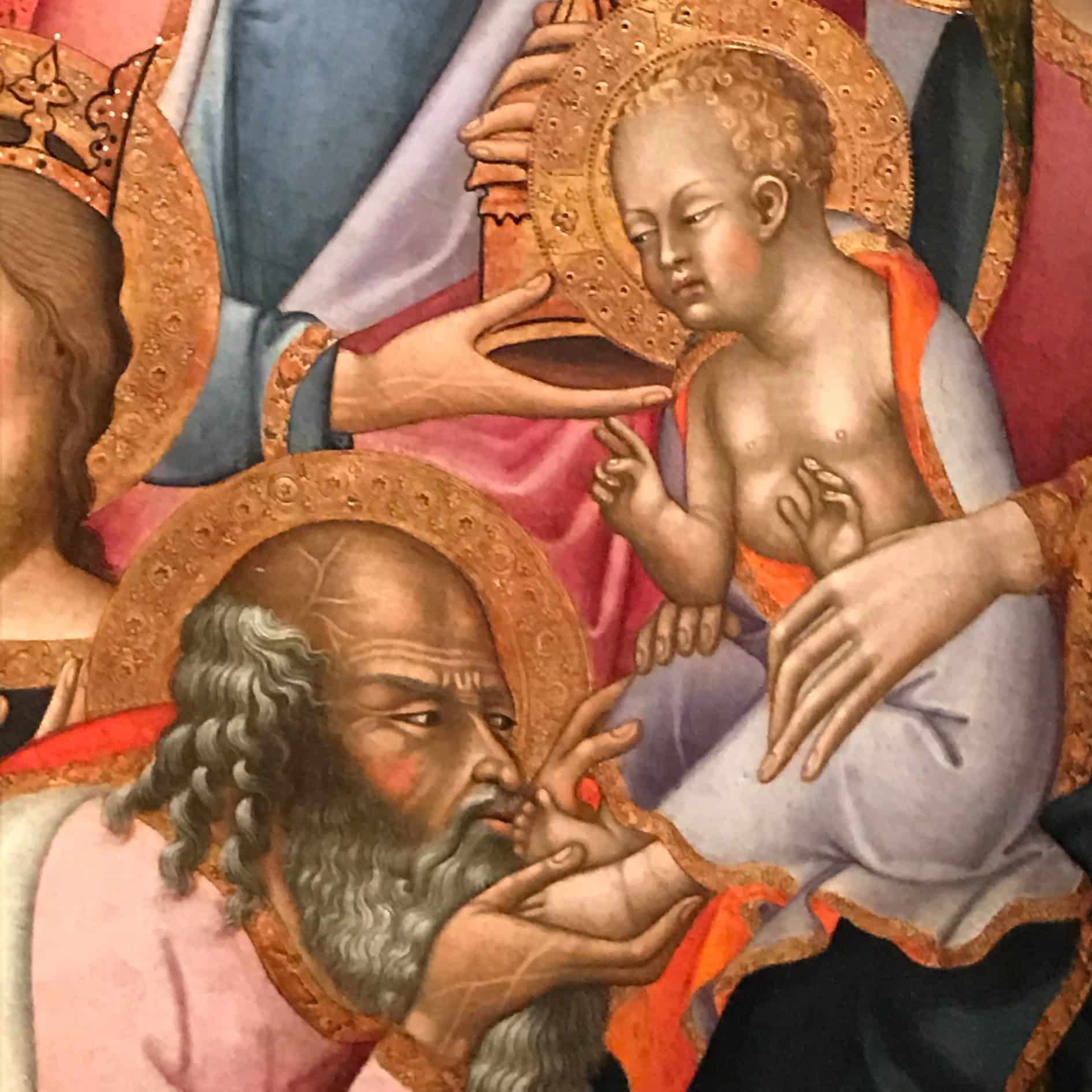
“Truth, as we Christians understand it, is no abstract principle, no code of doctrines, or of dos and don’ts. Truth is not a rigid and static matter. truth is not something one finds between two covers of a book. truth is a person; it is Jesus Christ in person. He tells us who God is and what God is like; and he likewise tells us who we are and what we should be like as human beings; he shows us how we can live in its fullness and find true happiness in life.” +Walter Cardinal Kasper
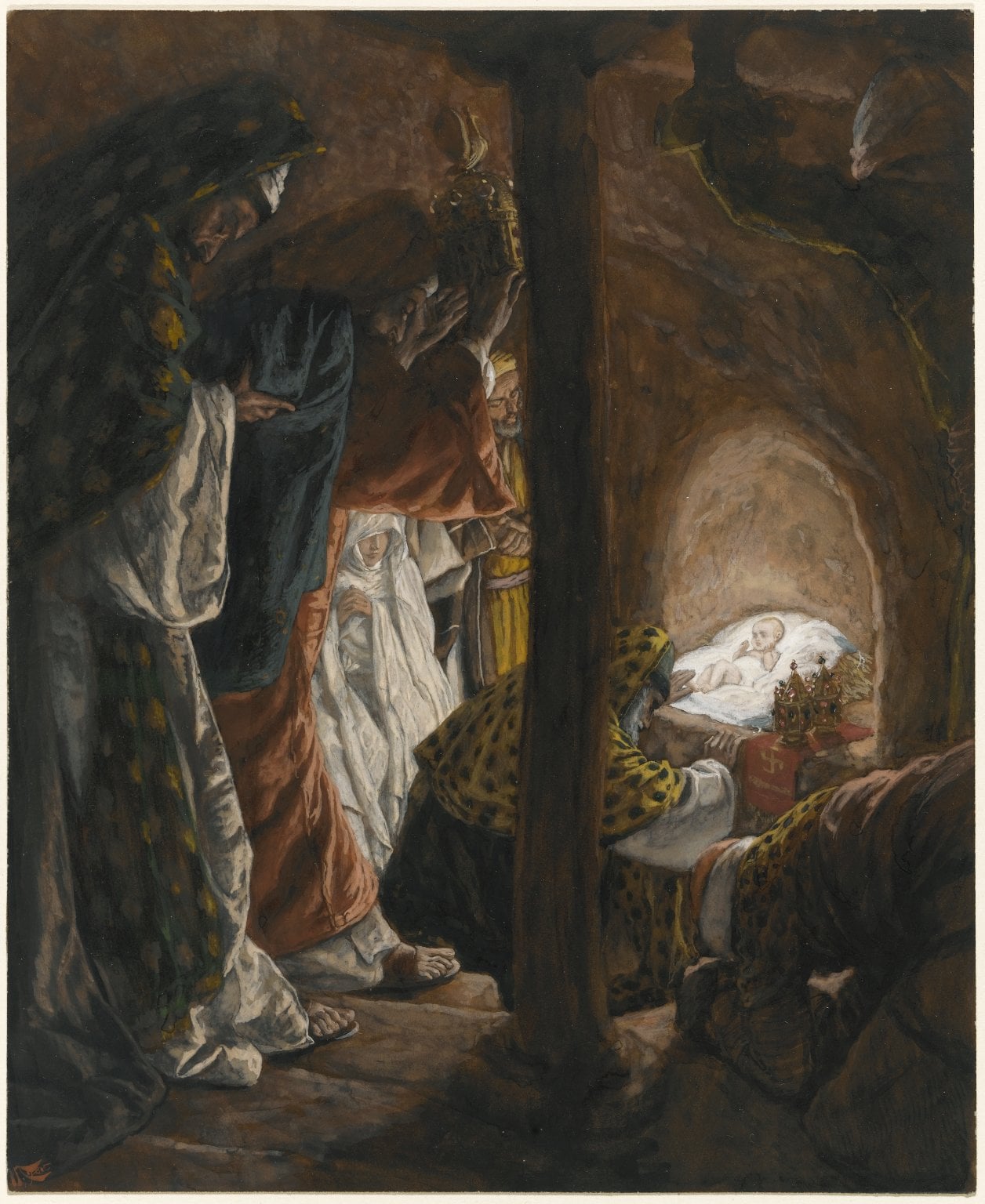
In the Brooklyn Museum is this picture of the magi worshiping the Christ child. In our independent and individualistic culture, this is quaint and out of fashion. To worship, to kneel, is seen as ritualized, antiquated humiliation. Devoting a portion of a perfectly good Sunday, or part of any day to worship, borders on the naive.
In these days of pandemic, public worship has an element of infectious danger. I have heard many speculate that after 9 months or perhaps even a year of not worshiping on Sunday, people will discard the habit-and never return.
As a priest, I am in favor of worship, but not as a tradition, or externally imposed obligation. God of course does not need our worship, but we do. Worship reminds us that there is only one thing in the world before which it makes sense to bow down, in fact only one place where we should genuflect, and that is before the God who can only be known as Love. Cardinal Kasper writes:
“We must learn to be silents and become aware that there is someone greater, one whose love embraces each and everyone of us, and whose infinite love sustains us (and at time suffers) us, who means well with us, accepts us, and forgives us again and again. It is enough, then, to say, “I thank you that you exist, that you are there for me. And I love you, too.” and then to genuflect, not because it is customary, but because this is what we owe a great God before whom we can humble ourselves without becoming small.
The gospel story of the three magi teaches us that Christmas ought not to be reduced to a feeling, a mood. Let Christmas lead us to worship. For it says to us, God is here.”
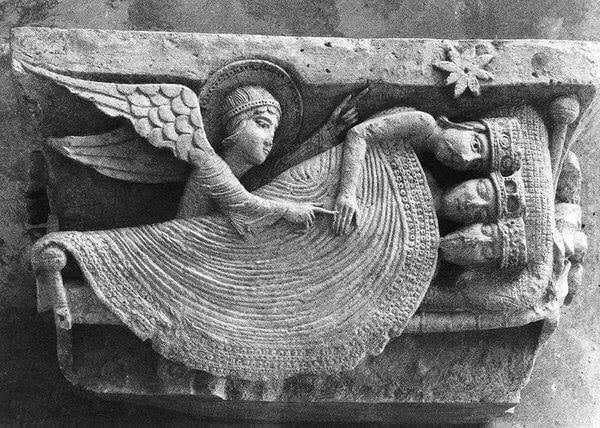
“An angel warned the wise men in a dream not to return to Herod, for he was seeking to destroy the child. So they left for their own country, by another route.” Matthew 2:12
The Epiphany story has an element of danger. The danger being, that power seeks to destroy, even the Christ Child. Then, as now, the Christ Child needs to be protected from becoming the collateral damage of selfishness. That protection only happens when we, now, as the magi, then, allow Christmas to change us-to send us into this 2021, by another route, different than the way we came.
How this Christmas changes me will determine how I live the rest of this year. I do not yet know what that change in me is, but I do know that the change, whatever it is, must lead me to protect the Christ Child who comes to identify with each and every person, especially the most vulnerable. I have been warned. I have a duty to protect the love in those around me. Herod is coming.
Amen.
Paulist Fr. Mark David Janus is president of Paulist Press.