May 23, 2025
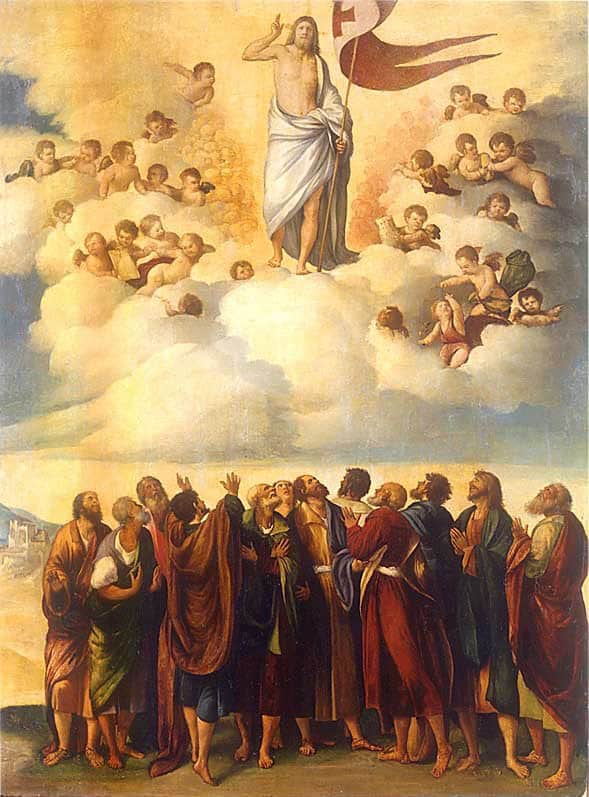 Jesus addresses the grief of his followers when he tells them he must leave them and go to the father. Why must he leave and what does that mean for us? A short reflection:
I get most sentimental at graduation. “Graduation” is a word that is talking about steps, passages, transitions. And of the kinds of graduations I attend, I think the ones from high school are the most dramatic and affect me the most. For college graduation, the child has probably already been out of the house. But for high school, the parents realize that their child will not always be with them; they are getting ready to experience huge changes in their lives and so are getting ready to eventually leave the house.
I don’t intend to translate Jesus’ words in the Gospel into graduation. But Jesus’ statement that the apostles will be sad when they no longer have him around is poignant. Why does Jesus have to go? Where is he going to? Yet, in these words, Jesus is telling his disciples, and us, about the next steps in our salvation.
Jesus does not go to the Father to be absent from us. He goes to the Father to take up a different kind of presence in our lives. We are fascinated with the physical body of Jesus, what he looked like, and who plays the best Jesus in our movies or on television. People love Jonathan Roumie in “The Chosen;” Jesus must have looked like him! But Jesus was not fascinated by his own body; his body was one way to be with us, but not the only way.
Jesus goes to the Father so we can begin to understand the implication of his resurrection. He rises to show us that every human being is destined to unending life. He rises to bring us beyond our own provincial images of redemption, that only this group or that group can be saved. He rises to become present to us all through the Holy Spirit who begins the transformation of Jesus’ followers which begins eternal life.
In this Easter Season we have been reading from the book of Acts of the Apostles. Each reading has contained the amazing work of the apostles, continuing Jesus own ministry. But it has also contained the essential story that the newfound faith in Jesus had to push beyond any boundary, any prejudice, any stereotype. Yes, the Gentiles, those who were considered unchosen and unclean, they indeed do have a place in God’s Kingdom; they too are part of God’s covenant. All can be part of Jesus’ community.
Just like in the lives of any of our children, there are growing pains. There are new situations with which one has to engage, new stages on which to act. In the first reading we see the apostles, under the influence of the Holy Spirit, articulate just this mystery of God’s universal salvation in Jesus. People do not have to become Jews in order to follow Jesus; they only need faith.
So we have all graduated; our baptisms and confirmations say that we have taken these major steps. We are all engaged in the project of extending salvation to others, of helping everyone discover the infinite love of God and the power of risen life in Jesus. Leaving the house, getting out into the world is not the danger we fear; rather, it’s the great opportunity God gives us as disciples.