June 2, 2015
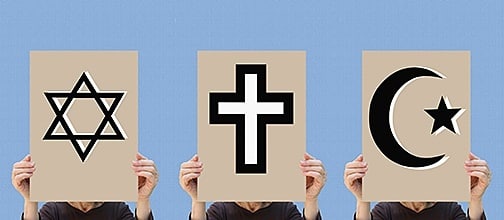
Casting aside the theological cobwebs isn’t easy. It’s been too long since I attended a theologically-dense conference, but I did so last week as the Catholic University of America School of Theology, and the United States Bishops Secretariat for Ecumenical and Interreligious Affairs sponsored a two day seminar on Nostra Aetate, which is the document of the Second Vatican Council which dealt with the dialogue with our brothers and sisters of the Jewish and Muslim faiths.
Each morning and afternoon, we heard two major addresses in each time period followed by a response. Each evening there was one major presentation and a response. The topics included: “Why Muslims Celebrate the 50th Anniversary of Nostra Aetate,” “Pursuing Truth in Dialogue” and “The Catholic Church’s National Dialogue with Jews since Nostra Aetate.”
Several cardinals of the Church presented papers including Cardinal Timothy Dolan, archbishop of New York; Cardinal Jean-Louis Tauran, president of the Pontifical Council for Interreligious Dialogue; and Cardinal Kurt Koch, President of the Pontifical Council for Promoting Christian Unity.
That’s a lot of Vatican expertise. I had not heard of many of the Rabbis or Muslim scholars who spoke, but they made wonderful presentations of their respective theologies and featured names like Sayyid Syeed, Seyyed Nasr, Rabbi Irving Greenberg and Rabbi Noam Marans. I was particularly proud that Father Thomas Stransky, a Paulist priest who is one of the architects of Nostra Aetate, was present to tell all of us about the crafting of the document during the years of the Second Vatican Council.
So, how would I summarize all that was said? That’s a fool’s errand because the richness of the theology of the various speakers was exquisite. Could I cherry pick a few ideas to reflect on? That’s easier. For example Sayyid Syeed, a Muslim scholar, reminded us all that each of us was a “citizen” of one Scripture, but not alienated by dealing with the others. So, Muslims are citizens of the Koran, but they are not unable to deal with the New Testament. It’s a bit like being an American and crossing over into Canada at the Peace Bridge. We remain citizens of the United States but we are able to deal with the realities of Canadian life. He also reminded us that all three faiths: Christian, Muslim and Jews are Abrahamic faiths of the one God.
Archbishop Michael Fitzgerald, an Irish interreligious scholar reminded us that we cannot ignore the questions: What is the future faith of Muslims, and are we seeing a radicalization of Muslims? He indicated that the value of mutual dialogue with the Muslims gets down to the reality that the more we talk to and listen to each other the better chance we have of a growth in understanding.
Rabbi Noam Arrans spoke in response to Cardinal Dolan’s paper on the Jews and Nostra Aetate. The rabbi pointed out that unlike Christians, Jews are both a religion and a people. Cardinal Dolan noted that while there is still much belief among Christians, there is a sharp decline in belonging. The rabbi said that Jews need both belief and belonging if they are to continue the covenant of Abraham.
There are many other points that were made of theological significance during the two days, but the seminar reminded me again of how important it is for all of us to try to deepen our understanding of our co-religionists who are Jewish, Muslim and of other faiths.