May 20, 2015
Editor’s note: The Church celebrates Pentecost this Sunday, May 24.
Pentecost is a Greek word referring to the 50th day, originally the 50th day after the Jewish feast of Passover. Its Hebrew name, Shavuot, means “weeks,” in reference to the week of seven weeks that began with Passover. Shavuot was the second of the three great pilgrimage feasts in the Jewish calendar – the first being the spring feast of Passover, and the third the great autumn harvest festival of Sukkot, which the New Testament typically calls “the Feast of the Tabernacles.”
Pentecost originated as a joyful thanksgiving for the early summer harvest of grain, strawberries, cherries, peas and asparagus. Two loaves of bread made from new flour would be offered to God as the fruits of the grain harvest. Fully leavened loaves were offered, whereas unleavened bread was offered at Passover seven weeks earlier.
Over time, Shavuot, became primarily a commemoration of the giving of the Torah at Mount Sinai, which happened about seven weeks after Israel’s escape from Egypt (Exodus 19). Just as summer fulfills the promise of spring, the giving of the Commandments fulfilled the promise of nationhood, of which the exodus event itself had been but a beginning. So, too, the gift of the Holy Spirit at Pentecost fulfilled the promise of the Resurrection, transforming the disciples from frightened friends of an absent Jesus to faith-filled witnesses testifying to the whole world.
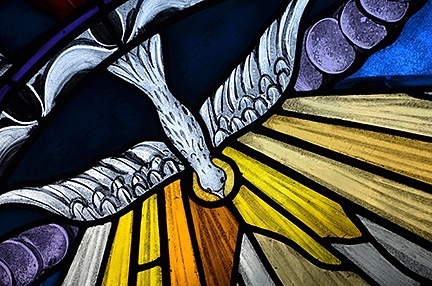
Pentecost is often called the “birthday of the Church” since it was as a direct result of their having received the gift of the Holy Spirit during the festival of Shavuot that followed Jesus’ Ascension that the Apostles began their mission of preaching the Gospel to the whole world.
The word “Pentecost” was once also used to refer to the entire Easter season since Pentecost and the Church are what fulfill and complete the promise of Easter and carry Easter out into the day-to-day life and work of the world.
In the Christian calendar, Pentecost marks the transition from the Easter season to Ordinary Time – the time of fulfillment, the time of the Church when the promise of the resurrection takes place in daily life. Just as the new life promised by spring continues into summer, the new life promised by the Risen Christ continues in our world thorough his church.
Thus Pentecost is the annual liturgical observance of what happens every week with the transition from Sunday to Monday. From our Sunday celebration around the unleavened bread which has become the body of our Risen Lord, we are sent forth to renew the face of the earth as one body and one spirit in Christ as the Risen Lord’s permanent presence in the leavened bread of our daily lives in this world.