May 4, 2015
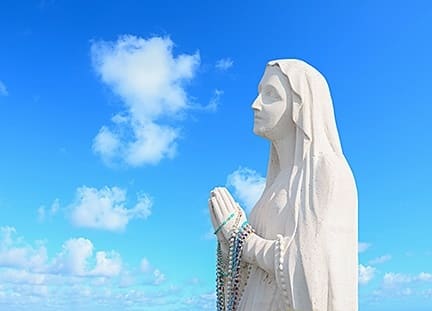
On May 3 at the 11:30 Mass, we at the Church of the Immaculate Conception in Knoxville, Tenn, had the traditional procession and coronation of Our Lady’s statue, always a very beautiful and joyful event. The month of May is traditionally dedica ted in a special way to the Blessed Virgin Mary, Mother of God and Mother of the Church. (It was on May 13, 610, that Pope Boniface IV consecrated an ancient Roman temple, the Pantheon, as the Church of Mary and all the Martyrs.)
Since the month of May largely overlaps with the Easter season, this invites us to pay particular attention to Our Lady’s participation in the Easter events, in particular her presence in prayer with the disciples after the Ascension as they awaited the gift of the Holy Spirit to initiate the time of the Church. Already during the Easter season, the Church contemplates the Risen Christ’s continued presence in the Church today through the ongoing action of the Holy Spirit. Now reigning as Queen of Heaven, Mary as Mother of the Church continues to be present and active in the life of the Church.
The hymn Regina Caeli, with which we conclude Mass each Sunday during the Easter season, is one of the Church’s four great Marian antiphons used at different seasons to conclude the Church’s daily office of prayer “(The Liturgy of the Hours”). The Regina Caeli is perhaps even more familiar as the prayer which replaces the daily Angelus during the Easter season. One popular legend associates its origin in the time of Pope St. Gregory the Great (540-604). According to the legend, one Easter morning as he was walking in procession, St. Gregory heard angels chanting the first three lines of the hymn:
Queen of heaven, rejoice, alleluia.
The Son whom you merited to bear, alleluia,
Has risen as he said, alleluia.
In response, Gregory was supposedly inspired to add the fourth line:
Pray for us to God, alleluia.
May has long been considered “Mary’s Month.” The famous English Jesuit poet Gerard Manley Hopkins (1844-1889) composed a poem called The May Magnificat, which begins:
May is Mary’s month, and I
Muse at that and wonder why:
Her feasts follow reason,
Dated due to season.
Eventually, the poet puts his question to Mary herself:
Ask of her, the mighty mother:
Her reply puts this other:
Question: What is Spring?
Growth in every thing.
Some of the poem’s answers include:
All things rising, all things sizing
Mary sees, sympathizing
With that word of good
Nature’s motherhood.
Their magnifying of each its kind
With delight calls to mind
How she did in her stored,
Magnify the Lord.
Well but there was more than this:
Spring’s universal bliss:
Much, had much to say