February 2, 2015
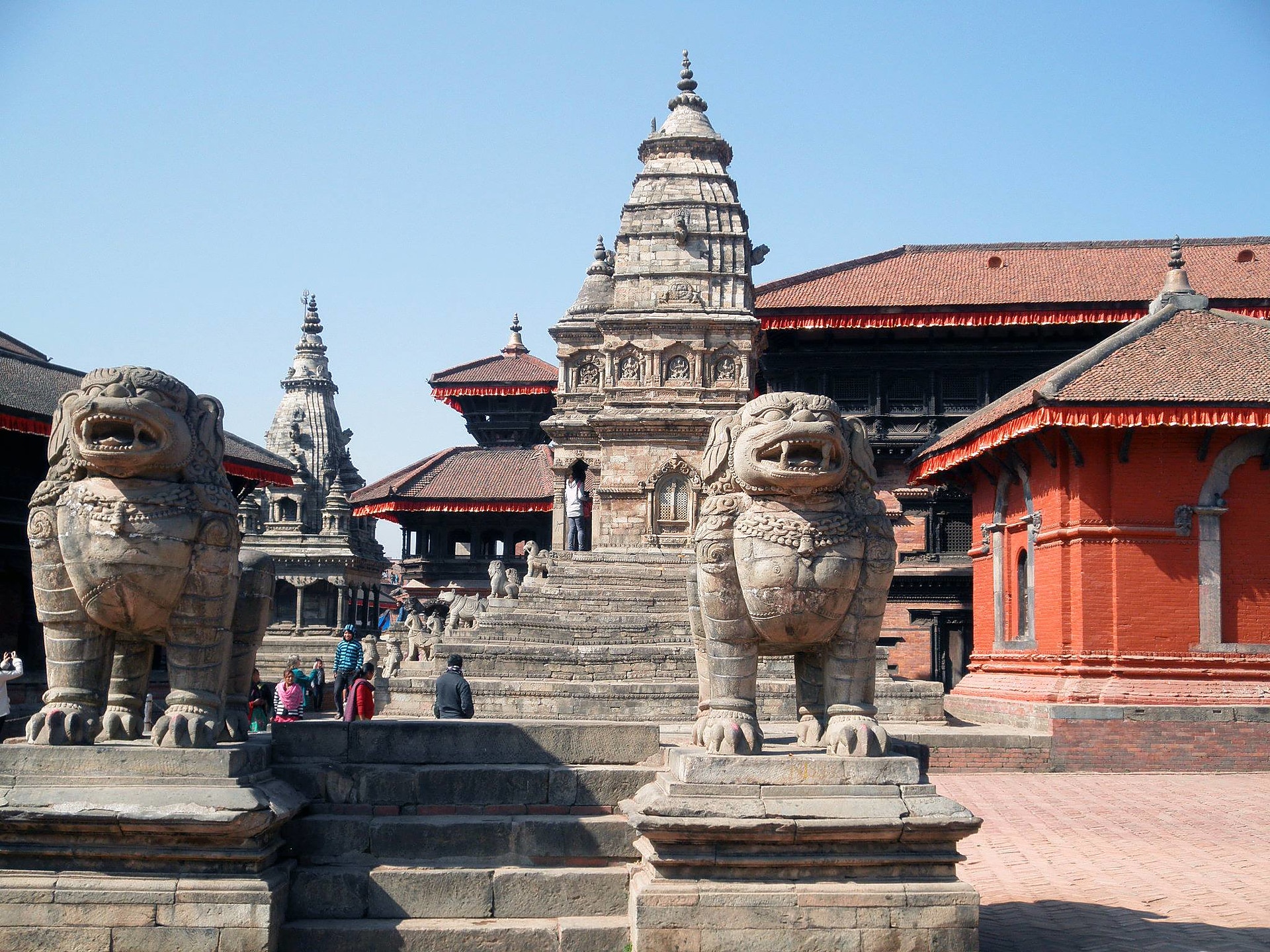
Today in Nepal (blue skies with a high of 71!) took us to the historic site in Patan Dabar Square of the royal palace of the former Malla kings of the Kathmandu Valley. The square before the palace is filled with several temples, some in the pagoda and some in the Indian style. The highest-touted museum of Asian art is housed within the palace building, and we took full advantage of its offerings to learn more about Hinduism and Buddhism. The majority of the exhibits are sculptures of Hindu and Buddhist deities accompanied by written commentary explaining their spiritual and historical significance as part of the cultural heritage of Nepal. The exhibits are also designed to assist in interpreting the living culture that is manifested in the streets outside, so the museum was a wonderful resource in response to our interfaith-intercultural pilgrimage.
We reveled in the weather during a tasty lunch enjoyed courtyard of the museum restaurant. Then came a late-afternoon lecture on the indigenous people of Nepal, the Newar by Father Greg Sharkey, SJ, a former student of Father Tom Kane, CSP, at Boston College who has spent 35 years in Nepal. Father Sharkey spoke of the enduring cultural practices of the Newar, from the coming of age ceremonies and funeral rituals to veneration of ancestors.
Some of the pilgrims witnessed a full moon ritual that evening that began at the Boudha Stupa with the lifting up onto a platform a statue of a goddess wrapped in bright colored scarves that, according to their mythology, saved children from being killed. The parade, led by Buddhist monks with horns and drums, circled the stupa several times and then took to the street with people holding high torches and leading the way shouting and crying out as though it were midnight on New Year’s Eve in Times Square!