February 3, 2015
This day was pure poetry. So much so, that we’ll break it into two parts, Part I today and Part II as tomorrow’s posting since that will be a travel day for us from Katmandu to Jaipur, India.
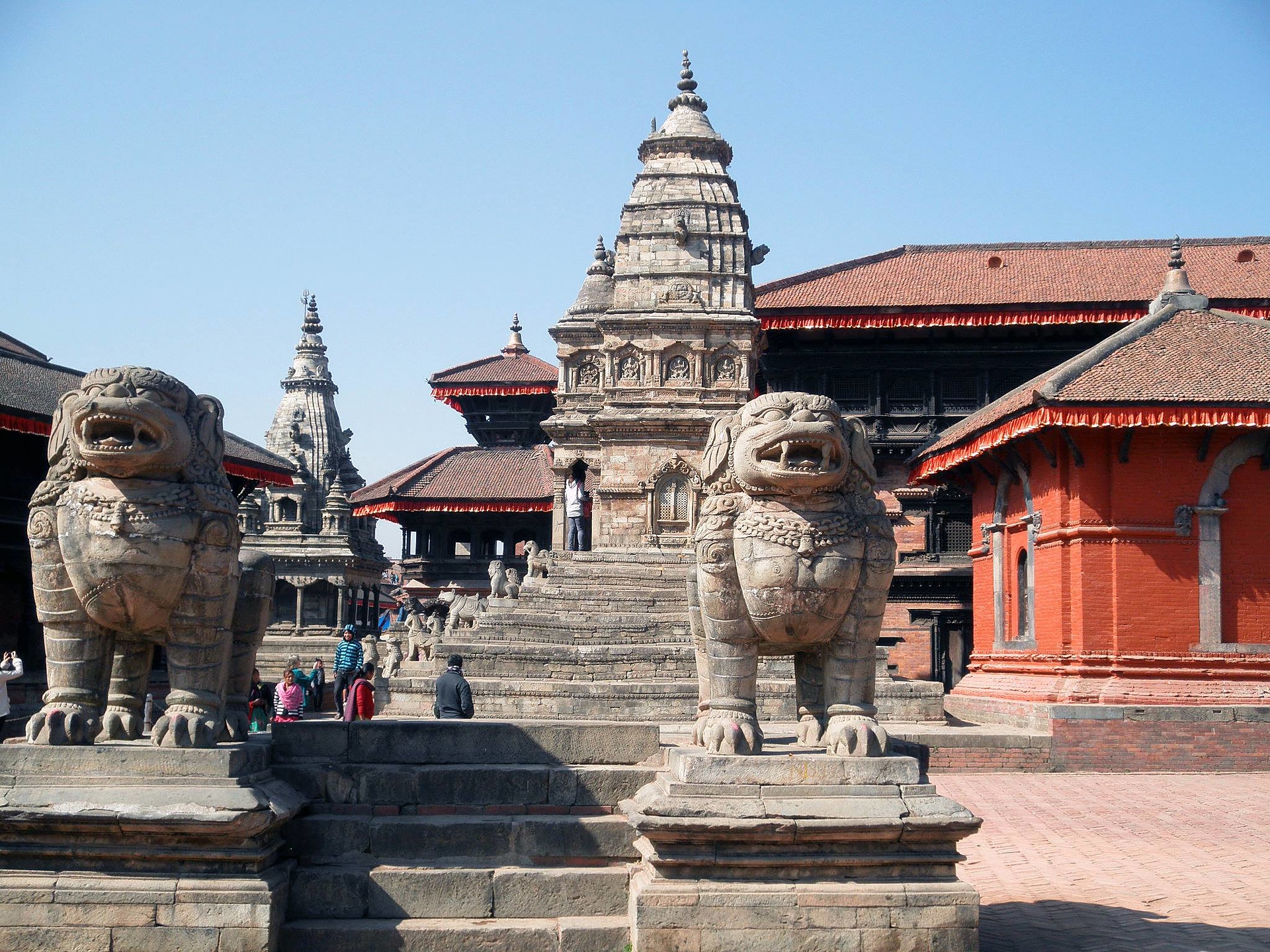
We piled into our bus, left the street mayhem and polluted air of Katmandu for a visit to the cultural capital of Nepal, Bhaktapur, a World Heritage Site the majority of whose inhabitants are Hindus or Buddhists who live together in harmony in the city.
Bhaktapur’s history goes back to the early 8th century, and is a living museum displaying the vibrant depth of Newari culture. Every few steps, we lost our breath again at the elegant architecture, art and cultural heritage of the city: the Pagoda- and Shikhar-style temples, ponds, stupas, city gates – living heritages that have been handed down from centuries in an unbroken chain from generation to generation and that are the major monuments of this ancient city today.
One indication of its museum-like character is that there is an entrance fee just to visit the core area of the city, and the fee is used for preservation of its culture. Its inhabitants are encouraged to build their buildings in traditional style with wood, bricks and tiles. You can step into wood shops and see the artisans sculpting decorative door frames or see the potters in Pottery Square working with their traditional wooden wheels for giving various shape and size to clay. And all along the way, you have citizens in traditional dress walking alongside, holding up their embroidery or beadwork or sculptures and inviting you to take something back home with you.
When one comes on a trip like this, there is usually a desire to experience something “out of the ordinary”, if not exotic or head-spinning. And though we knew we’d only scratched the surface in our limited time, this city exceeded our expectations. And the day was only half over …