February 8, 2015
We had ample opportunity today to take in both the countryside and street life via a three-hour bus ride from Agra to Delhi for a flight to the state of Uttar Pradesh, and then another hour bus ride from the airport into the city of Varanasi, one of the oldest living cities in the world. In other cities visited, we’ve basked in the architectural glories of emperors and kings, but in Varanasi the focus is on religious ritual and practice.
Varanasi stands at the center of the Hindu religious universe and has maintained its religious life since the 6th century B.C. in one continuous tradition, in part by remaining outside the mainstream of political activity and historical development. This is more like a Fatima or Lourdes pilgrimage site. It’s a place where thousands of pilgrims and residents come for their daily ritual ablutions. It has attracted seekers and students of the Vedas throughout the ages, including sages such as the Buddha and the founder of the Jain faith, Mahavira.
The landscape in Varanasi is marked by a plethora of Hindu temples and terraces, lined by stone steps—the ghats—which stretch along the whole waterfront where the river Ganges passes through the city. Hindus regard bathing in the Ganges as the elixir of life which brings forgiveness of sins, purity to the living and salvation to the dead.
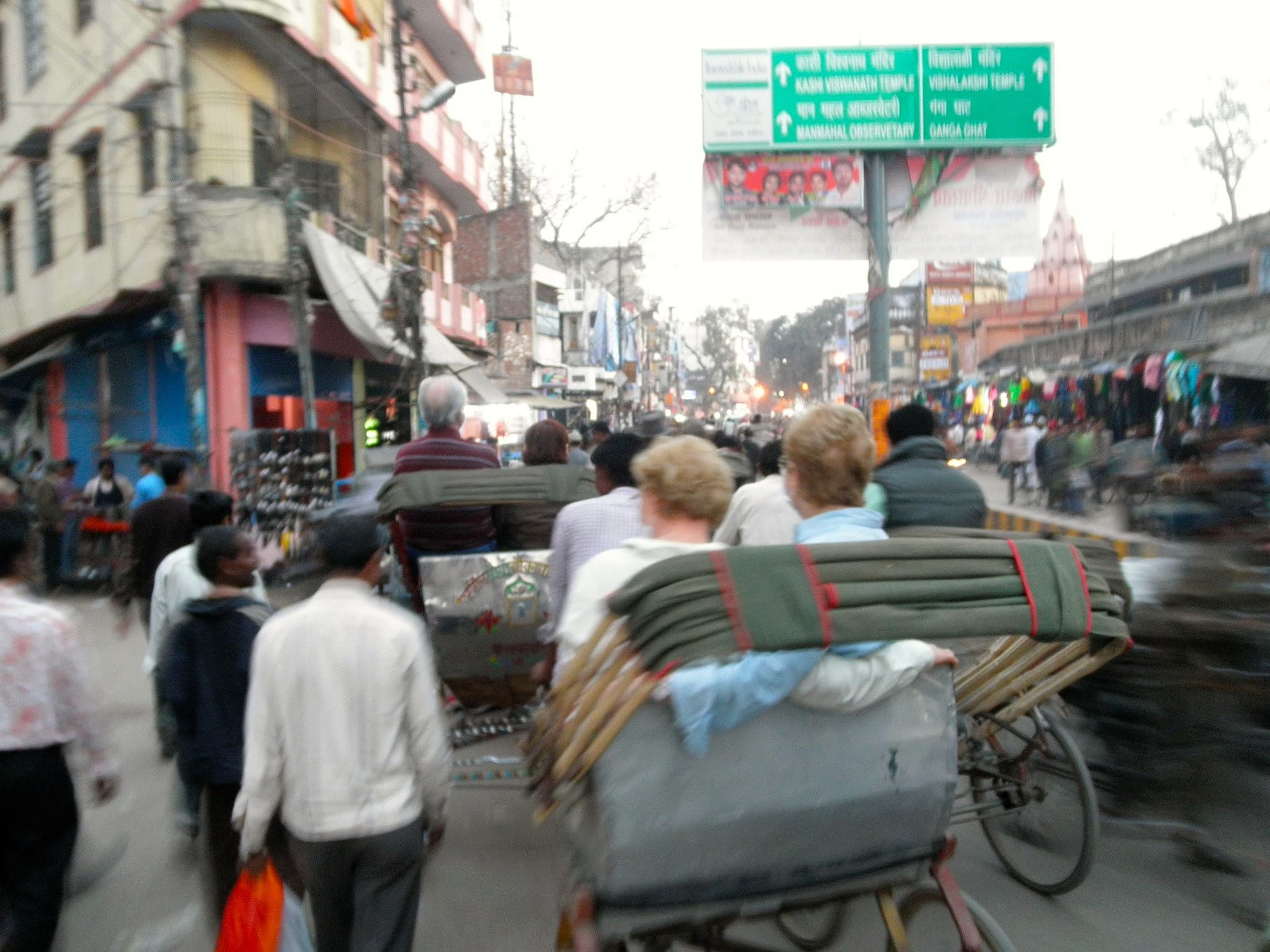
It is also a city that might win the prize for the most crowded streets in the world. We rode a mile and a half through the streets and down to the Ganges River in bicycle rickshaws designed for two passengers. There are no sidewalks, so pedestrians compete for space with motorcycles, rickshaws, bicycles, cars, trucks and buses – all of whom are trying to move forward against a cacophony of beeping horns.
Once down to the Ganges, we got in a large rowboat and went out into the river a short ways from shore so as to see the evening ritual of Arati being performed by seven Hindu priests offering incense, candlelights and fire to Ganga, the river goddess. We were each given by our guide a candle in a little bed of flowers to light and place in the river with a prayer, and then we watched them float down the river under a starry sky.
After the evening ritual witnessed by a huge crowd on land, we moved by boat along the shoreline and saw four bodies being cremated on the shore with relatives gathered around in one of Hindu’s sacred rituals. Anyone who dies in Varanasi is considered to attain instant enlightenment. After one’s body is cremated, the ashes are poured into the sacred river.
In the ride back towards our hotel on the rickshaws through the chaotic streets lined with shops, we were all feeling that we had just lived an extraordinary experience.