April 8, 2013
 Father Thomas Ryan, CSP
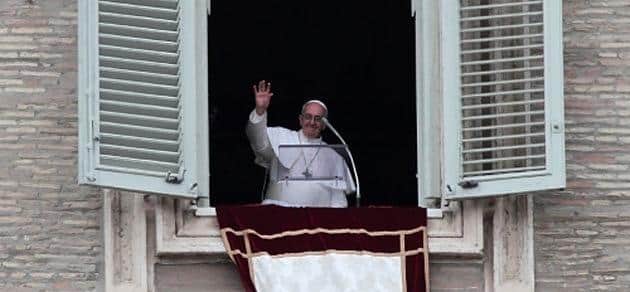
In the short time since Pope Francis’ election, he has evidenced a genuine concern for the poor of the world and a willingness to give the papacy a less regal image. Both tendencies are entirely consistent with the style and orientation of his prior ministry in Argentina.
What of his ecumenical track record? Given not only the historic enmity between Evangelicals and Catholics generally but also the deep divisions between the two constituencies in Latin America, one might not expect to find the bar raised very high.
However, Cardinal Bergoglio’s selection is receiving a glowing response in evangelical circles throughout the Americas. Christianity Today, the flagship publication of evangelicalism in America, has run three high-profile pieces detailing the reaction of leading evangelicals who have worked with or are familiar with Cardinal Bergoglio’s decades of ministry in Latin America. The cumulative effect of these reports is nothing short of historic. Here is a sampling of the response:
In Christianity Today’s interview, Luis Palau – a leading evangelical preacher – spoke of Cardinal Bergoglio’s openness toward evangelical Christians: “With the evangelical community, it was a very big day when we realized that he really was open, that he has great respect for Bible-believing Christians, and that he basically sides with them. … They work together. That takes courage. That takes respect. It takes conviction. So the leaders of the evangelical church in Argentina have a high regard for him, simply because of his personal lifestyle, his respect, his reaching out and spending time with them privately.”
“One day,” continued Mr. Palau, “I said to him, ‘You seem to love the Bible a lot,’ and he said, ‘You know, my financial manager [for the Archdiocese of Buenos Aires] … is an evangelical Christian.’ I said, ‘Why would that be?’ And he said, ‘Well, I can trust him, and we spend hours reading the Bible and praying and drinking maté [an Argentine green tea].’ People do that with their friends …. To me, he was making a point [about his relationship with evangelicals] by telling me that: trust and friendship.”
Prayer came up frequently as several of Argentina’s leading evangelicals, known for their unity efforts in Buenos Aires, described in other interviews their thoughts on the new pope.
Juan Pablo Bongarrá, president of the Argentine Bible Society, recalled when Cardinal Bergoglio once attended a weekly worship meeting organized by Buenos Aires’s charismatic pastors. “He mounted the platform and called for pastors to pray for him,” said Mr. Bongarrá. “He knelt in front of nearly 6,000 people, and [Protestant leaders] laid hands on him and prayed.”
“We evangelical leaders that know him are very happy with his election,” said Mr. Bongarrá. “We have had a good relationship with him for many years. We think that a new time is coming for the Catholic Church, because our brother wants to promote evangelism.”
“His election has been an answer to our prayers,” said Norberto Saracco, rector of Buenos Aires’s evangelical seminary and co-leader of the capital city’s Council of Pastors. “Bergoglio is a man of God. He is passionate for the unity of the Church – but not just at the institutional level. His priority is unity at the level of the people.”
Ecumenical leaders present at the Pope Francis’ installation included Bartholomew I, the first Ecumenical Patriarch of Constantinople to attend a papal installation since the schism of 1054.
Pope Francis’ reference to himself as the ‘Bishop of Rome’ was music to the ears of Orthodox leaders for whom the question of papal primacy has long been a problem for reunion. Their attendance at the new pope’s inaugural Mass was a sign of their hopes for closer communion.
A statement on the patriarchate website indicated the need for “a profoundly bold step … that could have lasting significance … After such a long division … the Orthodox and the Roman Catholic traditions have a renewed opportunity to work collectively on issues of mutual concern …”
But such work requires a first step and it would appear as though Ecumenical Patriarch Bartholomew is willing to take such a step. The Tablet in England fittingly framed the historic moment with these words: “In one of those seemingly informal but resonant gestures that we are beginning to expect from Francis, the response was immediate and commensurate. The successor of Peter greeted the successor of the other Galilean fisherman as ‘my brother Andrew.’”
The moderator of the World Council of Churches (WCC) Central Committee, Rev. Dr. Walter Altmann, a Lutheran pastor from Brazil, identified the election of Pope Francis as a “transition in Christianity.”
“My expectation is that his mandate can be marked by intense and deep ecumenical dialogue and cooperation,” said Rev. Altmann.
In his March 20 audience with religious leaders, Francis’ chair was on the ground – the same level as all the other religious leaders – and not on a raised platform.
For pastor Nestor Paulo Friedrich, president of the Evangelical Church of the Lutheran Confession in Brazil, “This election could mean surprise, change and opportunity.”
The Lutheran leader said he prayed that the election of Pope Francis would “contribute to the development of the Roman Catholic community and the world, working and encouraging renewed ecumenical partnerships, and strengthening dialogue towards common witness to the vibrant Gospel of Jesus Christ.”
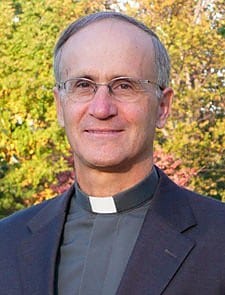
Father Thomas Ryan, CSP, serves as director of the Paulist North American Office for Ecumenical and Interfaith Relations in Washington, D.C.