December 26, 2012
Introduction to Part Two: Father Paul Robichaud, CSP
Servant of God Father Isaac Hecker was born and died the week before Christmas with 68 years intervening. Yet in terms of his personal reflection on the meaning of Christmas, only his 1870 sermon survives. Here in part two of that sermon, Father Hecker speaks about love. In part one Hecker explains that God became man in order for human kind to know God. Here he explains that God became man so that human kind might love God. He speaks about how in the order of creation, creatures are attracted to their own species, so that to assist human kind in loving God, God became man.
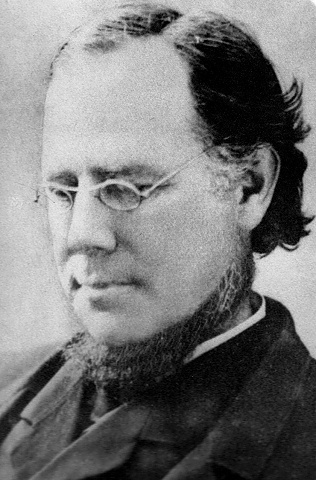 Sermon for Christmas (1870)
God became man in order to be loved.
Before the birth of Christ, God was not only, not known, God was not loved. God rendered himself visible to be known, and rendered himself as man, that man might love Him all the easier. For the knowledge of God does not suffice; and the heart of man seeks love. In the creation God made man like Himself. In the Incarnation, God made Himself like man. To accomplish this there was no need of any change in human nature. But is not man a sinner and is not sin a contradiction to God? God became in all things like one of us except sin for sin is not in our nature but contrary to it. God became man. Et homo factus est (And was made man).
Christ was in the likeness and habit found as a man; that is to say Christ was really truly man and being man, thereby found man to love Him not only by the Law of resemblance, but by the strongest of ties, that of consanguinity. For it is the law of nature that “like loves like.” Birds love birds, beasts love beasts, man loves man. Christ is our brother who we can approach with feelings of confidence and affection. When the Indians went out to hunt buffalo they covered themselves with buffalo skin and by this device, their fears were disarmed and they were allowed to be close enough to shoot them. So Our Blessed Lord approaches us without awakening our fears, covers Himself with our humanity and captivates our hearts with the fire of His divine love. O wonderful agent of Divine Love! O Blessed hunter of our hearts, O the goodness and kindness of God Our Savior. Benignitas et humanitas Dei Salvatoris nostris. (The goodness and kindness of God our Savior)
The invisible became visible. God became Man. For love acknowledges no limits and knows no impossibilities. God can become an infant. For love not only surrenders itself to the object loved, but surrende1r0s1 itself in the form most attractive to the object loved. Now in an infant we see all that is good, lovely and sweet in human nature, with the absence of all that is repulsive. Where is there a human heart that can resist the stratagem of Divine Love? The Almighty God a helpless infant. O folly of Divine Love, thus to stoop and win human hearts. God has made Himself of no account for our sakes.
About Hecker’s 1870 Christmas Sermon
Servant of God Father Isaac Hecker preached this sermon at the Paulist Church of St. Paul the Apostle in New York City on Christmas morning 1870. At this time Father Hecker was in the most effective periods of his ministry and a year away from developing symptoms of leukemia that would drain him of his energy. During the previous five years he had built up Catholic publishing in America, completed a successful tour of lyceums in the country lecturing on American Catholic identity to mixed audiences of Protestants and Catholics, had addressed the bishops at the Second Council of Baltimore and attended the opening of the First Council of the Vatican. Finally Hecker saw mission preaching restored; a work that had been temporarily put on hold since 1865. He had a broader perspective on the Church and was highly optimistic about his role and that of the Paulists in the Church of the 1870s.
His Christmas Sermon is divided into three parts, each with a short introduction. In Part One, we learn that Christ came at Christmas in order to be known. In Part Two, we learn that Christ came at Christmas in order to be loved. Finally in Part Three, we learn that to a world scared by war, Christ came to bring peace. In a period when America was in healing, following the Civil War, it contexts the message of his sermon. To our readers we wish you an Advent filled with light and a Christmas filled with hope.
Father Paul Robichaud, CSP, is Historian of the Paulist Fathers and Postulator of the Cause of Father Hecker.
If you have asked Father Hecker to pray for you or another person who is ill and you believe something miraculous has happened, please phone Father Robichaud at 202-269-2519 and tell him your story.