March 30, 2015
Easter is a season of hope. Light comes from darkness, life emerges, rises up from suffering and death. There is no better time to speak about Easter hope than this Easter weekend. This is a reflection from Father Hecker’s 1854 Spiritual Notebook. Father Hecker was 34 years old at the time and had been ordained a priest for five years. He loved his work as a Catholic evangelist. The Redemptorist mission band had expanded out of the New York State; the missionaries’ national reputation grew. Father Hecker had begun to focus his attention on Protestants who came out to the missions. To this purpose, Father Hecker began to write in 1854 his invitation to Protestant America to consider the Catholic Church, “Questions of the Soul” which would make him a national figure in the American church.
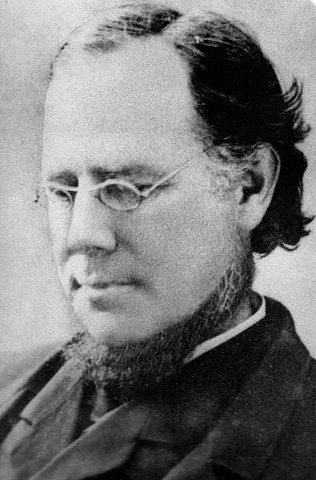 Praying in Hope
Lack of hope is the most ordinary fault of religious people. We sin more against hope than any other virtue. We need to be cheerful and perform frequent acts of encouragement, make it our study and our meditation. Throw all your care on God and put all your confidence in him. This is what God wishes of us. What have we that we have not received by being faithful to the conduct of his providence? God has not changed his providence towards us, should we then change our conduct towards him. No one who has hoped in the Lord has been confounded. God is a protection to all who seek him in truth. Wait on God with patience; join yourself to God and endure.
At the beginning of our spiritual life our soul is like a vessel launched upon a boisterous sea. After a period of time, we enter the gulf stream of sanctity, which leads us to our place of destination – God – even without the need of chart, compass or rudder. All winds are favorable and we have but repose and to be carried to our goal. The stiller and quieter we are the more rapidly we advance. Let us abandon all into the hands of Divine Providence, lead where it will. Let us endeavor to follow it with the same firm and equal step when it leads through the valley of humility or when it elevates us to the mountaintops of joy. God will give us great contentment to find the source of all one’s delight and pleasure is in the doing God’s will.
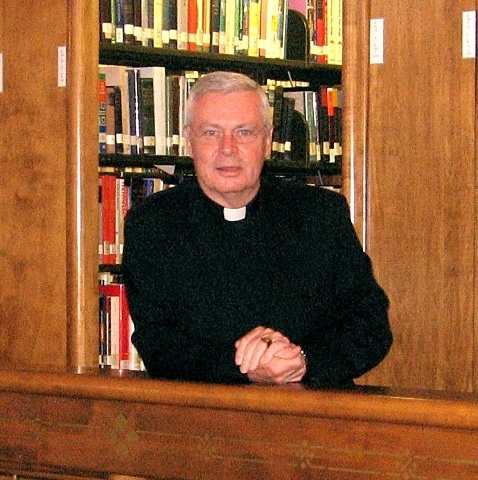 A Response from Father Paul Robichaud, CSP
One of the principal virtues that Servant of God Father Isaac Hecker practiced was the virtue of hope. Living among the Transcendentalists (the spiritual but not religious romantic intellectuals of his day), Father Hecker refused to give up on organized religion as they had. In an age of strong anti-Catholicism both in the political and popular culture of his time, Father Hecker believed this was an opportunity to evangelize Protestant America by boldly preaching the Catholic faith. Even late in his life when he suffered from debilitating leukemia that often left him without the energy; he would appear to outsiders and guests as engaged, involved and full of life. Father Hecker lived the virtue of hope in so many ways, believing that in God’s providence the future God has planned was brighter than the past.
“We sin more against hope than any other virtue,” says Father Hecker, the great optimist. The opposite of hope falls on a spectrum that goes from cynicism to real fear of the future, from giving up and not trying because something looks too difficult to actual fear about the future. Yet as Christians the Gospel teaches us about the triumph of the Risen Christ and the coming of the Kingdom of God. We know the story ends with Christ’s triumph therefore we should live in hope with confidence and trust in God.
Father Hecker explains the stages of growing in prayer and how through hope it leads us to greater trust. The first stage of prayer is difficult, as you don’t know whether you are doing or saying the right things. It is like being cast on a boisterous sea. Prayer leads us towards union with God and as we grow towards God we grow in holiness. This takes us to the second stage of prayer, the gulfstream of sanctity where we experience the holiness of God. As Father Hecker says, “the stiller and quieter we are,” the more grace takes control. In the presence of God, we learn God’s will for our lives. As we grow to accept God’s providence we reach the third stage of prayer, which in turn brings us peace and fulfillment in a way nothing else can bring.
About this series
Father Paul Robichaud, CSP, is the historian of the Paulist Fathers and postulator of the Cause of Father Hecker. His office is located at the Hecker Center in Washington, D.C.
If you have asked Father Hecker to pray for you or another person who is ill and you believe something miraculous has happened, please phone Father Robichaud at 202-269-2519 or write to [email protected] and tell him your story.