March 24, 2014
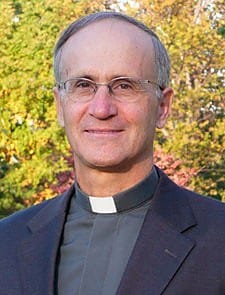 Father Tom Ryan, CSP
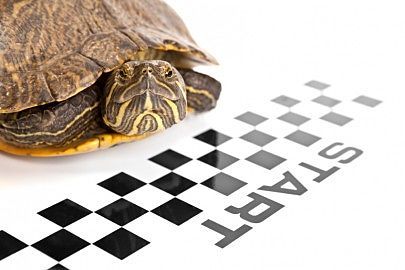
Slow out of the starting block with your Lenten practices? How about using the whole season of Lent as your starting block?
Take for example, the traditional Lenten practice of fasting. In the Judaeo-Christian tradition, there is a tripod of core spiritual practice: prayer, fasting, and almsgiving, and all three are intricately related to one another.
For St. Augustine, who holds preeminence among the Western church fathers, if fasting was to elevate the soul, it had to have two wings: prayer and works of mercy (Sermon 206). In another place, he altered the image, saying that almsgiving and fasting are the wings of prayer:
“Break your bread for those who are hungry, said Isaiah; do not believe that fasting suffices. Fasting chastises you, but it does not refresh the other. Your privations shall bear fruit if you give generously to another. Do you wish your prayer to reach God? Give it two wings: fasting and almsgiving.” (Discourse on Ps 42).
Another patristic writing, The Shepherd of Hermas, underlines the connection between fasting and almsgiving: “On the day on which you fast, you will reckon up the price of the dishes of that day which you might have eaten but did not, and you will give it to a widow or an orphan or some person in want.”
So, if all three of these practices are tightly woven together, how can any one of them be quarantined to just one 40-day season of the Church year, as we have done with fasting? There are three major themes in the history and practice of Christian fasting, and we would do well to refocus them for ourselves.
The first one is mystical longing for fulfillment. As Jesus said when asked why his disciples didn’t fast like those of John the Baptist: “The wedding guests cannot mourn as long as the bridegroom is with them, can they? But the days will come when the bridegroom is taken away from them, and then they will fast” (Matthew 9:15).
In short, the faithful, after Jesus’ departure, being oriented towards his return in glory, are to fast as a sign of their expectant longing for him to come again. It will be their way of participating in his death and resurrection in their own bodies as they wait in hope for the day of his return.
The second theme is liberation through discipline. Enter the penitential motif, which is probably the first association most people have with the practice of fasting. What has not always been clearly grasped, however, is that penitence is always oriented towards freedom and liberation.
As St. Paul wrote to the Galatians, “For you were called to freedom, brothers and sisters, only do not use your freedom for self-indulgence but through love become servants to one another” (Galatians 5:13). The entire tradition of monasticism bears witness that union with God usually presupposes a life of self-discipline and self-privation rather than a life of self-indulgence.
The third motif is the innate connection between fasting and works of charity. The preaching of the Church Fathers clearly understands that whatever savings is realized through one’s fasting belongs to the poor. Thus St. Gregory the Great, Bishop of Rome, preached that those who do not give to the poor what they have saved but keep it for later to satisfy their own appetite do not fast for God.
And a fourth motif could be added from the interface of religion and science in our time: rest, detoxify, and heal. Normally, in addition to digesting food, which is its biggest job, the body works to eliminate wastes, fight diseases, ward off sickness and nourish the blood.
When it is relieved of its biggest task, the system can have a house-cleaning day and catch up on some of its “backwork” in those other areas. Fasting normalizes metabolism and brings a welcome physiological rest for the digestive system and central nervous system. Some of the benefits to which people attest are: You feel healthier. You feel tranquil. You sleep better. You kick your addictions. You free up some time for deeper pursuits.
Obviously we’re not talking here about considering “one main meal and two lighter meals” as fasting. That would more appropriately be considered “reduced eating,” if that. In the early Christian centuries, fasting was generally understood as abstinence from all solid food until evening, or one meal a day, which was to be as simple as possible. In the context of a holistic spirituality today that accords a place to the fourth motif above, one would be encouraged to drink throughout the day water, raw juices and herbal teas that both detoxify and cleanse the system.
As Lent is meant to deepen our spiritual life, why not use this season to put in place and regularize an interwoven approach to prayer, fasting, and almsgiving for your Christian living on Fridays throughout the year?
Father Thomas Ryan, CSP, is the director of the Paulist Office for Ecumenical and Interfaith Relations based in Washington, D.C.